Catoctin Region
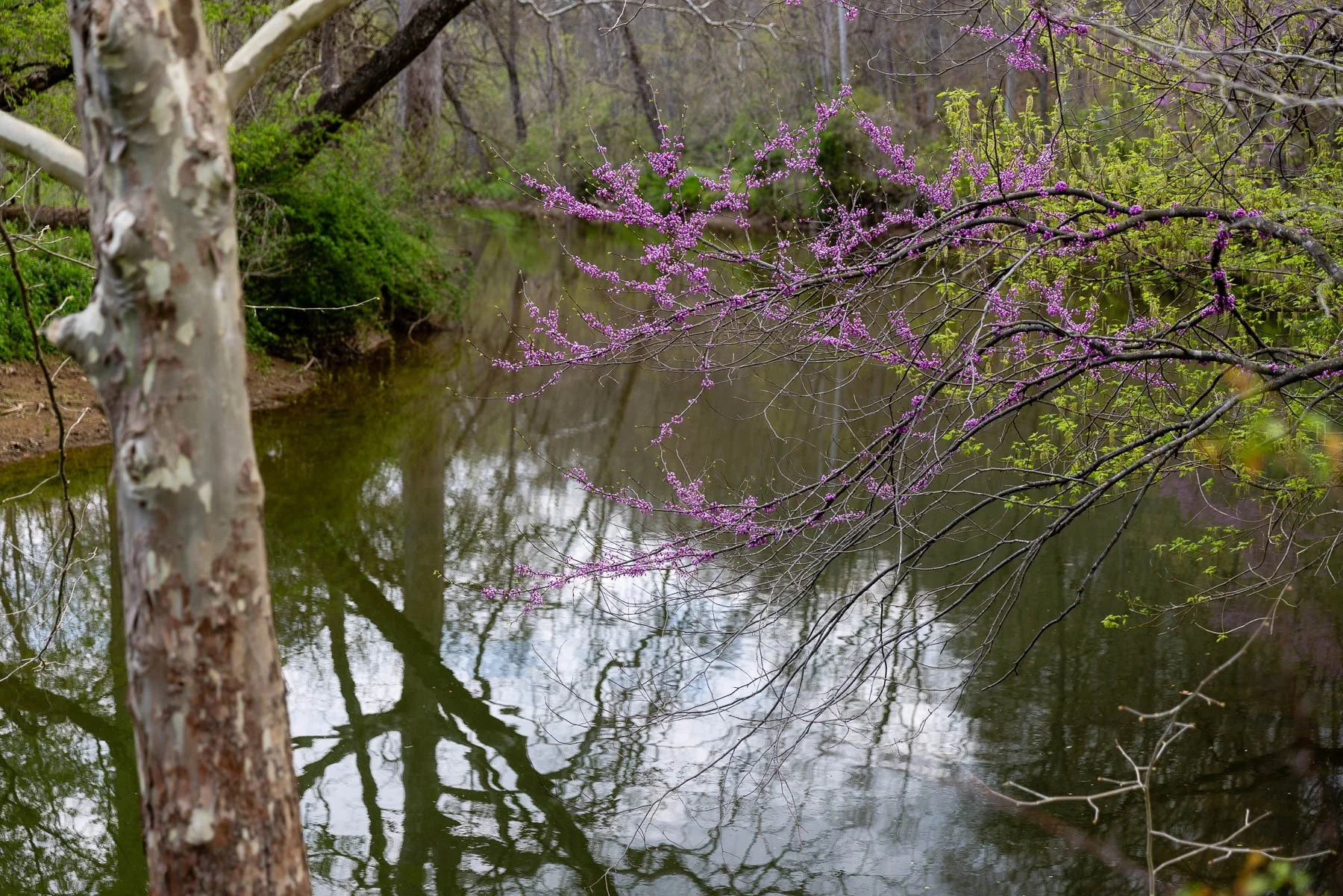
Catoctin Creek flows Jefferson, Maryland, close to where it meets the Potomac River. (Photo by Will Parson/Chesapeake Bay Program)
The Catoctin Creek region, located in western Frederick County, Maryland (and spilling over into neighboring Loudoun County, Virginia), boasts a rich history shaped by indigenous hunting grounds, 18th-century German agriculture settlements, the industrial-era Chesapeake and Ohio (C&O) Canal, and the creation of modern presidential retreats.
The area's timeline highlights several pivotal chapters:
Indigenous Roots (Circa 8000 B.C.–1600 A.D.): Long before European settlement, the region was utilized heavily as a hunting ground. Native American groups, notably the Kittocton clan, used the region for temporary camps and quarried valuable meta-rhyolite on Catoctin Mountain to craft stone tools.
German Settlement (1730s–1750s): Western expansion brought waves of German immigrants to the fertile Middletown Valley and the banks of the Catoctin Creek. Pioneers like Peter Suman built early cabins, establishing a bedrock of devoutly religious, agricultural communities.
Industrial Era & The C&O Canal (Late 1700s–1800s): The area became an industrial hub with the establishment of the Catoctin Iron Furnace, which provided iron from 1770 until 1903. During the 1830s, the C&O Canal was built, and engineers constructed the Catoctin Aqueduct (known as the "Crooked Aqueduct") to ferry mule-drawn canal boats over the creek.
The New Deal and Presidential Retreat (1930s–1940s): Stripped of timber by the iron industry, the land was purchased by the federal government during the Great Depression. The Civilian Conservation Corps built recreational parks. In 1942, President Franklin D. Roosevelt established a secret presidential retreat here, famously renamed "Camp David" by Dwight D. Eisenhower.
Modern Day: Today, the region preserves its natural and industrial roots. The creek region features sites like Catoctin Creek Park and nearby parks in Frederick County. Additionally, the name is carried on by modern craft producers like Virginia's Catoctin Creek Distilling Company, paying homage to the region's historical ties to American rye whiskey.
Catoctin Mountain Park Historic District: There are two primary periods of significance for Catoctin Mountain Park. The first phase begins in the Late Archaic Period (circa 3000 BC), with the earliest verifiable use of park lands, and ends in 1954, with the creation of the current boundaries of the park. The second period of significance starts in 1942 with the creation of the presidential retreat, originally known as Shangri-La, and runs to the present.